
Reviewed · FERRY TICKETS
Istanbul: Troy Guided Bus Tour with Ferry Tickets & Lunch
Troy is worth the long road from Istanbul. This 16-hour guided trip combines a ferry crossing, a local lunch, and a walk through the ruins tied to Homer’s Iliad. I like that the day gives you a serious look at Troy without arranging buses, ferries, and transfers yourself. I also like the guides, including Levant, Sandy, Duygu, and Aytac, who have been praised for making the ancient stones easier to understand. The drawback is clear: the day begins around 5:30 to 6:30 in the morning and ends late, with a great deal of road time.
I especially like the Dardanelles ferry ride, which gives the journey a memorable geographic twist. You cross between Europe and Asia while moving toward one of the ancient world’s most famous cities. The lunch is another practical plus, though you should note that the €27 Troy entrance fee is not included in the $148 price.
Key points to know before booking
- Troy takes a full day from Istanbul: Expect about 16 hours, including long bus rides, ferry crossings, stops, and the guided visit.
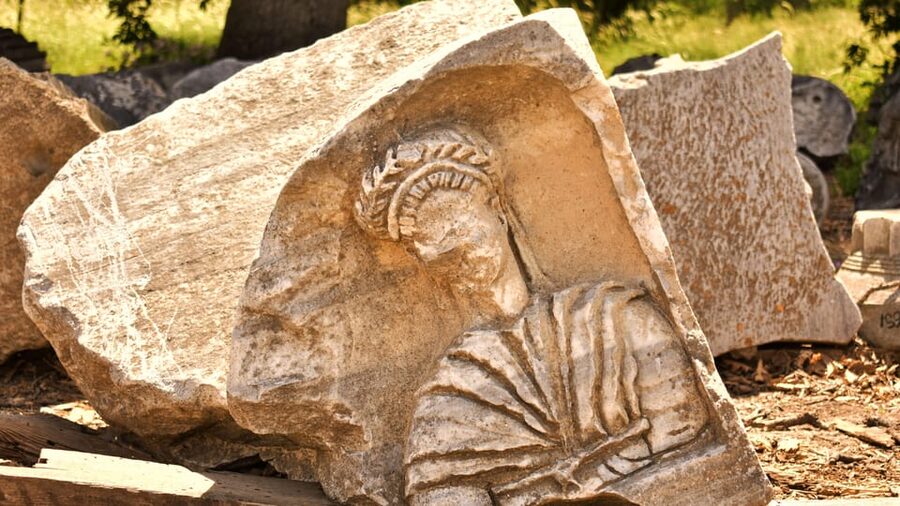
- The site is more than the Trojan Horse: You’ll see layers from different eras, the Temple of Athena, Odeon, Bouleuterion, old walls, excavation areas, and Roman remains.
- Lunch comes before Troy: The meal is served in the Eceabat area, with fish, chicken, meatballs, and a vegetarian choice reported.
- The Dardanelles crossing adds real value: The ferry ride connects the geography of the trip with the ancient world you are about to explore.
- Bring extra money for admission: Troy entry costs €27 per person and is paid separately at the site.
- Transport is comfortable but not always quick: Vehicles have air conditioning and USB charging, yet Istanbul traffic, pickup loops, and waiting can stretch the day.
Why Troy makes a worthwhile day trip from Istanbul
Istanbul has enough monuments for several days, but Troy offers something different. You leave the Ottoman mosques and Byzantine churches behind and head toward a site tied to Bronze Age legend, Greek poetry, and several thousand years of settlement.
The appeal is not a perfectly preserved city. Troy is a low, wide archaeological site where walls, foundations, ramps, and scattered stones require explanation. Without a guide, you could easily walk past the remains of the Odeon or the Temple of Athena and see only broken masonry.
That is why the live English-speaking guide matters here. Guides such as Levant, Sandy, Duygu, and Aytac have been praised for clear explanations and an engaging style. A good guide helps you connect the different Troy levels with the story of Homer, the Trojan War, Greek mythology, and the later Greek and Roman occupation.
I also like that the tour includes the journey itself. The road from Istanbul takes you through the Marmara region, and the Dardanelles ferry gives you a physical sense of the divide between Europe and Asia. This is not just a quick flight to a ruin and a taxi ride back. The route helps explain Troy’s location and why this narrow waterway mattered for trade, armies, and movement between continents.
More Ferry Trips with Lunch in Istanbul:
- Princess Island Tour with Lunch & Ferry Ride
★ 3.5 · 8 reviews - All Inclusive Blue Mountain,Scenic World,Lunch,Koalas,ferry
★ 5.0 · 7,832 reviews - Kangaroo Island Full Day Experience by Ferry Including Lunch
★ 4.5 · 1,202 reviews
The early pickup and long drive
Hotel pickup is offered from the Sultanahmet and Taksim areas, usually between 5:30 and 6:30 in the morning. The exact time depends on your hotel, and you may be assigned a nearby meeting point to make the transfer easier.
That early start is necessary. The first bus section takes about two and a half hours, followed by a break, then another roughly two-hour stretch toward Eceabat. The overall road time is a major part of the experience, so I would not recommend this trip to anyone who dislikes long coach journeys.
The transport has received generally good marks for comfort. One vehicle was described as a cool, comfortable 16-seat bus with USB charging points. There is no Wi-Fi, and one person found the guide’s talks harder to hear over the air conditioning and road noise. If the history matters to you, sit near the guide when possible and bring headphones for the quieter parts of the journey.
Pickup can also take longer than expected. One account described a bus circling Beyoğlu for about an hour and a half while collecting people. Istanbul traffic is a fair explanation, but it still affects your energy before the main visit begins. The operator usually sends pickup details in advance, and one person reported a punctual driver and helpful contact from Beyza.
Lunch in Eceabat before the ferry
The group stops in Eceabat for lunch before continuing across the water. This is more than a quick roadside snack, since lunch is included and gives you a proper break after the first long section of the drive.
The meal has included fish, chicken, meatballs, and a vegetarian option. Timing is worth noting. Lunch may be around 11:00, while an optional breakfast stop can happen earlier, near 9:00. I would keep breakfast light if you want to enjoy the included meal.
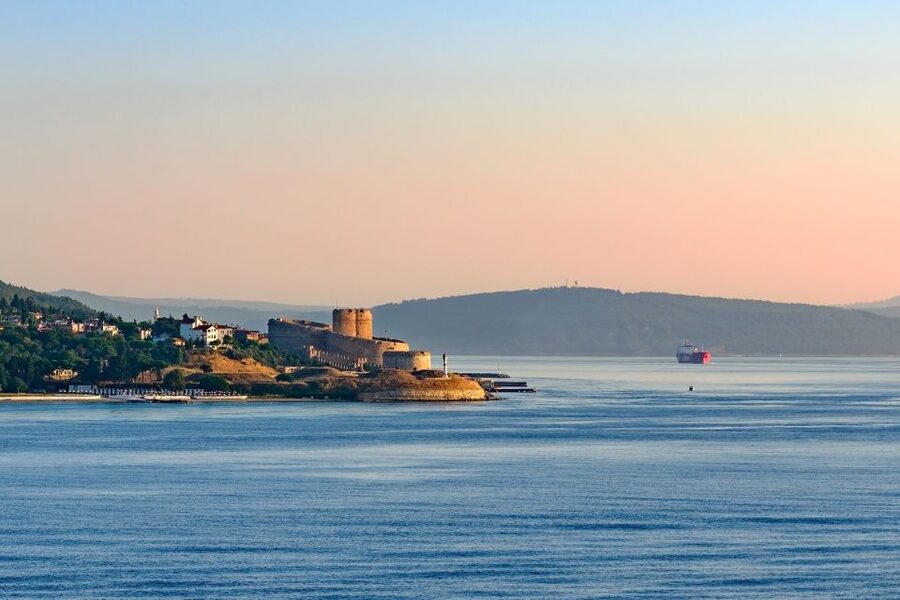
Eceabat is also the staging point for the ferry crossing. After eating, you board a ferry toward Çanakkale, with the crossing taking about 25 minutes. On the return, another ferry ride takes about 30 minutes.
These crossings are among the best parts of the day. You get a break from the bus, fresh air, and a view across the Dardanelles. The strait forms part of the boundary between Europe and Asia, so for a short time you are physically between two continents. That small detail gives the long transfer a sense of place.
Çanakkale and the two Trojan Horses
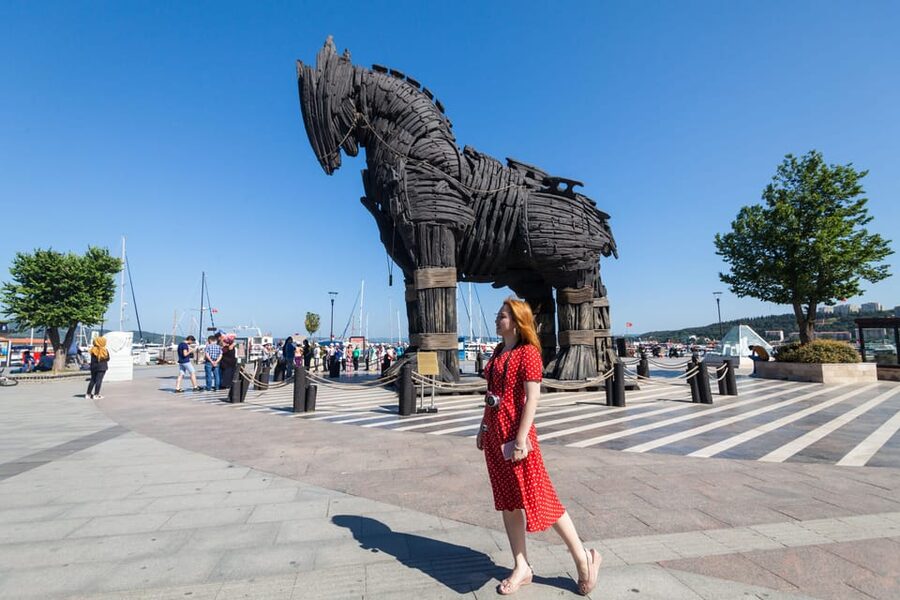
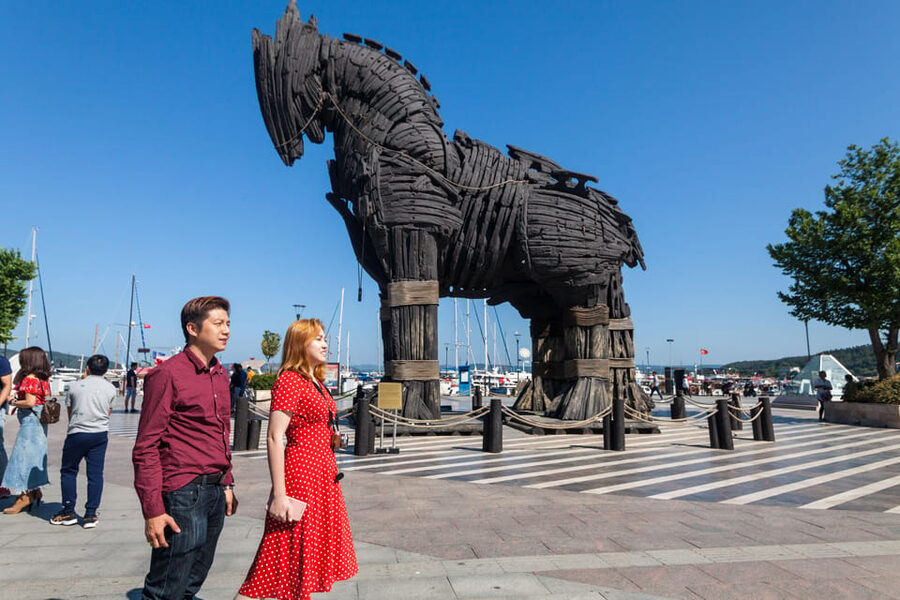
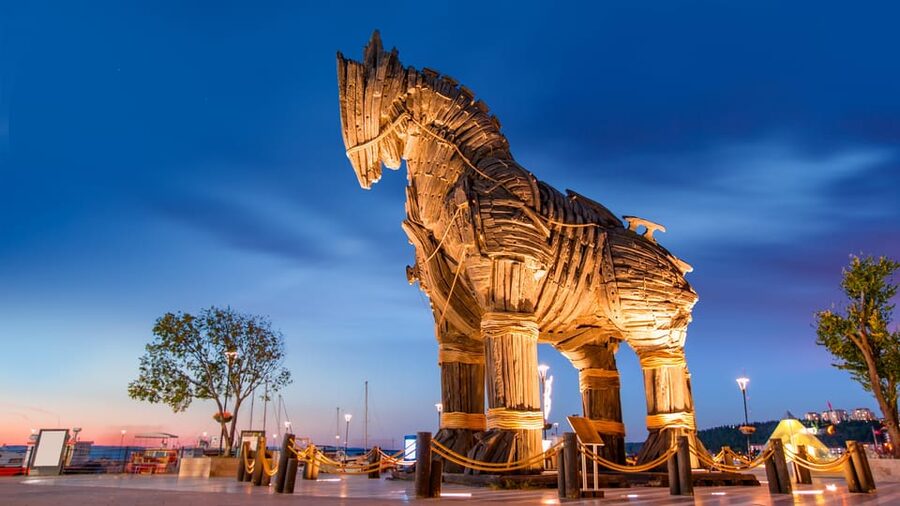
Before or around the Troy visit, you may see Çanakkale and its famous wooden Trojan Horse. This is the horse made for the Brad Pitt film and later donated to the city in 2004. It is not the ancient horse, of course, but it is an amusing modern part of the Troy story.
At the entrance to the archaeological site, you will see another horse, a replica built in Turkey in the 1970s. This one is designed as a visitor symbol for the ancient city. The two horses make a useful contrast: one belongs to modern cinema, the other to the way Turkey presents Troy to modern visitors.
Do not expect the replica to be an ancient object. Its value is theatrical and symbolic. The real reward begins after you pass beyond it and start following the exposed remains.
More Ferry Tickets in Istanbul:
- Istanbul: Round-Trip Ferry Tickets to the Princes’ Islands
★ 4.1 · 586 reviews - Corralejo: Return Ferry Ticket to Lobos Island Fuerteventura
★ 4.7 · 3,098 reviews - From Naples: Capri Guided Tour with Ferry Tickets & Minibus
★ 4.5 · 2,366 reviews - From Helsinki: Return Day Trip Ferry Ticket to Tallinn
★ 4.8 · 2,238 reviews
Walking through Troy’s many layers
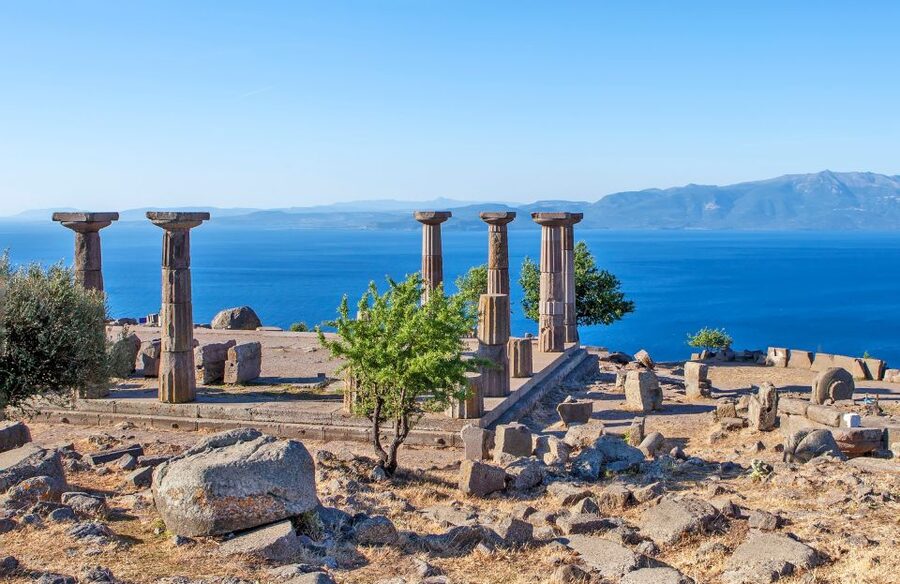
Troy is best understood as a stack of cities rather than one single ruin. Excavations have revealed settlement levels stretching across thousands of years. The guide helps you sort them out, which is one reason this tour works better than a solo stop with only a few hours on site.
The earliest levels include Troy I, associated with Bronze Age construction and mud brick. Later levels used different materials, including limestone. Troy VI is often linked with the period associated with Hector and the Trojan War traditions, though the exact connection between archaeology and Homer’s story remains a matter of interpretation.
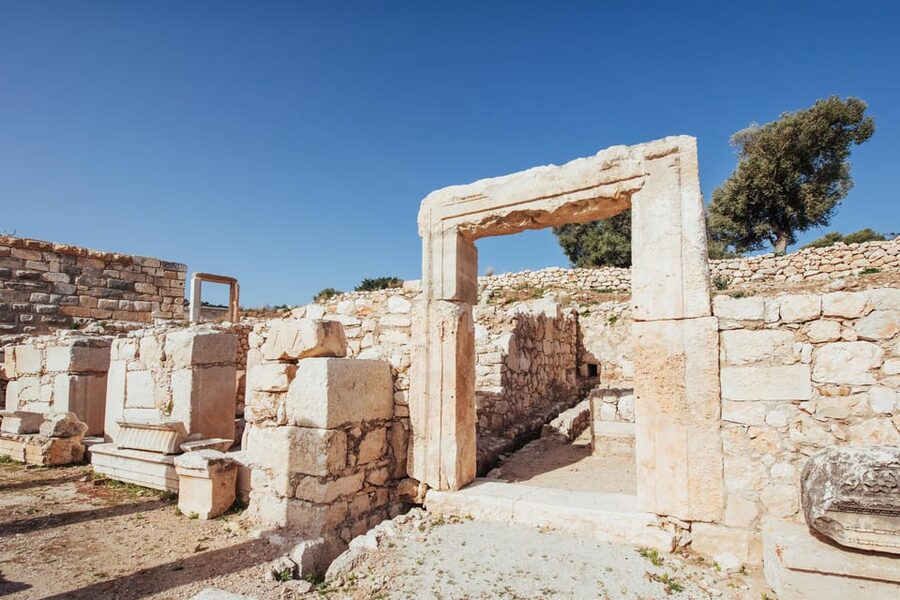
Later levels include Greek and Roman remains. One detailed visit pointed out marble used in Troy VII and VIII, along with Roman features in Troy X, including a Roman bath and amphitheater. You can also see sections of the old defensive walls, ramps, and thick masonry that help explain why Troy was difficult to attack.
The site’s open character means the guide’s words matter. You will walk between foundations and uneven ruins, so good narration turns a scattered site into a sequence of neighborhoods, public buildings, defenses, and sacred spaces.
The Temple of Athena
The Temple of Athena is one of the key stops. Today, you see ruined remains rather than a complete sanctuary, but the location helps show the religious importance of Troy during the Greek period.
I would pay close attention to the guide here. A short explanation about how the temple changed across different settlement periods adds much more than simply taking a photograph of the stones.
The Odeon
The Odeon was a small performance space used for poetry recitals and musical events. It gives you a glimpse of Troy as a functioning civic center, not only a fortified settlement from a war story.
The word Troy often brings Homer to mind, but the Odeon points to the later Greek and Roman city. It is one of the stops that broadens the visit beyond the Trojan Horse and Achilles.
The Bouleuterion
The Bouleuterion was used for political discussions and civic business. Its remains remind you that the people who lived here had institutions, public decisions, and ordinary concerns beyond the famous conflict described in mythology.
This is a good place to ask the guide about the different periods at the site. The surrounding ruins do not all belong to the same city, and the changing function of the area is part of what makes Troy interesting.
Excavation areas
You may see active excavation work during the visit. That gives you a rare view of archaeology as an ongoing process rather than a finished display.
The site is still being studied, so some questions about Troy remain open. A guide who explains what is known and what is still debated helps you avoid treating every part of the Homeric story as proven fact.
The museum question
The nearby Troy Museum can add useful context, especially before walking through the ruins. One itinerary included a museum visit before the archaeological site, while another person noted there was not enough time to enter the museum in Troy.
I would treat the museum as a possible extra, not a guaranteed part of this package. The confirmed focus is the ruins, the guided walk, and the surrounding transport. If the museum is important to you, ask the local supplier before departure how much time is planned for it.
This matters because the ruins can feel abstract without artifacts, models, and displays. At the same time, adding a museum visit to an already packed 16-hour day may reduce your time at the site or make the return even later.
How much value do you get for $148?
The price is $148 per person. That includes hotel pickup and drop-off, bus transport, both ferry tickets, lunch, and an English-speaking guide.
For an independent visit, you would need to arrange the long road transfer from Istanbul, reach the ferry, cross the Dardanelles, find transport to Troy, and coordinate the return. The tour saves you from managing that chain of connections. It also gives you someone to explain a complicated archaeological site.
The price is less attractive if you only want a short look at the famous horse. The journey is simply too long for that. You are paying for the full route, the guide, the ferry crossings, and the convenience of returning to Istanbul the same day.
The extra €27 admission fee should be part of your budget. Several people felt the cost would be clearer if the entrance charge were included in one total price. You can pay admission at the box office, but the tour information should make this separate expense plain.
Lunch adds practical value, though it is not a reason to book the excursion by itself. The real value comes from combining transport and interpretation for a difficult day trip.
Who will enjoy this trip most?
I would recommend it to anyone with a strong interest in ancient history, Homer, archaeology, Greek mythology, or the connection between literature and real places. It also suits you if Troy is a priority but you have only one spare day in Istanbul.
The tour works well for people who prefer a planned day. Pickup, ferries, lunch, and the return route are arranged for you, and the English commentary helps make sense of the site.
I would think twice if you have limited stamina for long bus rides, want a slow archaeological visit, or dislike very early starts. One person suggested staying overnight in the area because there is more to see nearby. That is sensible if you can spare the time.
The summer heat also matters. The bus air conditioning can help, but the ruins are outdoors. Comfortable walking shoes, water, sun protection, and a hat are practical choices, though the supplied information does not specify the site’s exact walking conditions.
Small-group feel and guide quality
The group size can be relatively small, with one account describing a cozy group and another noting small-sized groups. However, the wider operation may involve several minibuses, especially around lunch and the ferry.
The strongest part of the tour is the human explanation. Guides have been described as friendly, passionate, approachable, and clear. Levant was praised for making the history inspiring, Sandy for her enthusiasm, and Duygu for bringing the museum and ruins to life. Aytac was described as jovial and easy to follow.
That consistency matters at Troy. The site does not hand you a single dramatic monument like the Hagia Sophia. You get walls, foundations, civic buildings, and traces from several eras. A lively guide can turn those remains into a story without pretending that myth and archaeology are the same thing.
Practical advice for a smoother day
Keep your morning meal small because lunch may be served around 11:00. Bring cash or another way to pay the €27 entrance fee, and confirm the exact method with the local supplier before you leave.
Ask for your pickup time the day before. Some pickups run smoothly, but traffic and hotel collection can add time. If you are staying outside the main Sultanahmet or Taksim zones, confirm the assigned meeting point rather than assuming the vehicle will reach your door.
Expect waiting at certain points. One person found the day included more pauses than necessary, and another flagged an unpleasant restroom stop after Troy. These are minor compared with the site itself, but they are worth knowing about when planning a 16-hour outing.
The return journey follows the ferry and bus route back toward Istanbul, with another break in the Marmara region. Some people arrived ahead of schedule, while others found the day longer because of traffic and waiting. Plan nothing demanding for the evening.
Should you book the Istanbul to Troy tour?
Book it if you want to see Troy in one day and prefer a guide to explain its many periods. The ferry rides, included lunch, comfortable small buses, and well-regarded English commentary make the difficult logistics manageable.
Skip it if you want a relaxed overnight visit, a long museum session, or freedom to set your own pace. Troy is far from Istanbul, and no tour can remove that fact.
For history lovers, this is a strong use of a spare day. Pay attention to the separate entrance charge, prepare for the early start, and think of the road as part of the experience rather than wasted time. You will return tired, but with a much clearer idea of why Troy still matters.
FAQ
How long is the Istanbul Troy tour?
The tour lasts about 16 hours, including hotel pickup and drop-off, bus travel, ferry crossings, lunch, and time at Troy.
What time does pickup begin?
Pickup is generally arranged between 5:30 and 6:30 in the morning from hotels in the Sultanahmet and Taksim areas. The exact time depends on your hotel and the local supplier.
Is entrance to Troy included in the price?
No. The Troy entrance fee is €27 per person and is paid separately.
Are ferry tickets included?
Yes. Ferry tickets are included in the tour price. The route includes a crossing of the Dardanelles between Eceabat and the Çanakkale area.
Is lunch included?
Yes. Lunch is included and is served in the Eceabat area. Food options have included fish, chicken, meatballs, and a vegetarian choice.
Is the tour conducted in English?
Yes. The tour includes a live English-speaking guide.
Does the tour include the Troy Museum?
The confirmed visit focuses on the archaeological site of Troy. Museum time can vary, so ask the local supplier before departure if visiting the museum is important to you.
What can I see at the Troy archaeological site?
You can see the replica Trojan Horse, the Temple of Athena, the Odeon, the Bouleuterion, defensive walls, Roman remains, excavation areas, and settlement layers from different periods.
Just added around Istanbul
- Istanbul Food Escape : Ferry to the Flavors of the Asian Side★ 5.0 · 5 reviews
- Princess Island Tour with Lunch & Ferry Ride★ 3.5 · 8 reviews
- Istanbul Bites and Sights : Mosques, Markets & Ferry to Asia★ 5.0 · 6 reviews
- Galata Tower – Fener-Balat Neighborhoods & Golden Horn by Ferry★ 5.0 · 12 reviews
- Multi Cultural Istanbul: Galata Tower – Fener and Balat – Golden Horn by Ferry★ 5.0 · 14 reviews
- Soap Opera tour: Golden Horn via Public Ferry – Half Day★ 4.0 · 7 reviews
- Istanbul: Guided Food Tour with Ferry Ride★ 4.9 · 13 reviews
- Galata Tower – Fener and Balat – Golden Horn by Ferry★ 4.9 · 12 reviews
Ferry Tickets, compared.
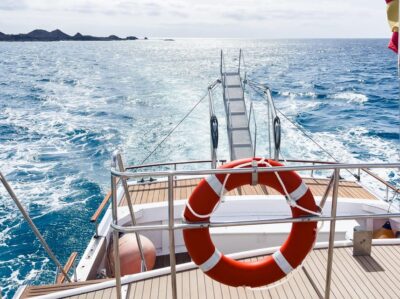
Return Ferry Ticket to Lobos Island Fuerteventura
Read our review →
Capri Guided Tour with Ferry Tickets & Minibus
Read our review →

Robben Island Ferry Ticket and Guided Prison Tour
Read our review →
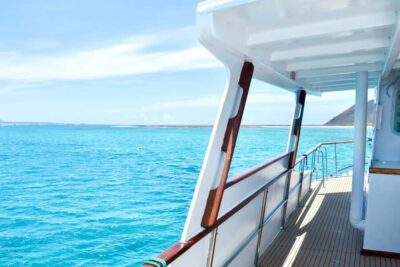
Snorkeling on Lobos Island & Return Ferry Ticket
Read our review →
Santorini Guided Day Trip From Crete with Ferry Tickets
Read our review →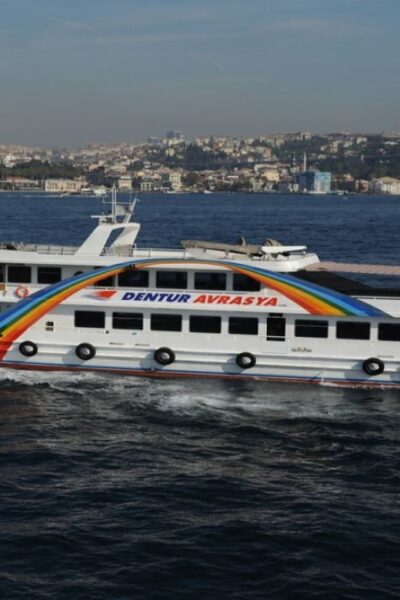
Round-Trip Ferry Tickets to the Princes’ Islands
Read our review →Browse the lists this tour appears in