

Reviewed · SELF-GUIDED TOURS
Harpers Ferry Audio Tour History, Ruins and River Views
History meets a steep walk here. This self-guided audio tour turns Harpers Ferry into an open-air storybook, using your phone’s location to trigger short explanations as you reach forts, ruins, churches, cemeteries, and river overlooks. I like the freedom to walk at your own pace, and I like how the narration helps connect today’s quiet streets with John Brown’s raid, Civil War battles, Black education, and the town’s industrial past. The main drawback is simple: this is a spread-out route with uphill sections, and finishing every stop may feel like a lot in two hours.
The tour costs $9.99 per person, with children 10 and under free. That is fair value if you want historical context without joining a scheduled group. You bring your own phone, download the tour before arriving, and follow the route from Lower Town Train Station. Cell service can be weak, so preparation matters.
Five things to know before you go
- GPS-triggered storytelling: Audio begins as you reach many locations, so you can listen while looking around instead of staring at a screen.
- John Brown is only one chapter: The route also covers Storer College, Black education, Civil War sites, industry, railroads, and the town’s river setting.
- Expect hills and stairs: The Appalachian Trail staircase and upper-town stops make this more demanding than a flat stroll.
- Start with a full battery and downloaded tour: The route depends on your phone, and cell service is spotty.
- The route is private and flexible: Only your group participates, and you can pause or continue at your own speed.
- One important closure: The museum focused on African American life in Harpers Ferry is currently closed for renovations.
Starting at Lower Town Train Station
The official starting point is Lower Town Train Station at 182 Potomac Street. This is a sensible place to begin because the station introduces Harpers Ferry as a transportation crossroads, not just a pretty old town.
The tour is designed to be followed in order, though the app technically lets you begin elsewhere. I would start at the station anyway. The story builds from the town’s setting and early development toward its conflicts and social changes. Starting in the middle may save a little walking, but it can scramble the narrative.
Allow about two hours if you move steadily and listen at each stop. The supplied stop times are short, often five or ten minutes, but the actual outing takes longer once you pause for views, read markers, find the next location, and handle the hills. The tour ends back at the starting point.
More History Trips in the USA:
- Boston Historic Taverns Tour with Tastings and Ferry
★ 5.0 · 156 reviews - Boston: Historic Pubs Walking & Ferry, Food & Drink Tour
★ 4.9 · 56 reviews - Halifax: Georges Island National Historic Site Ferry Ticket
★ 4.9 · 28 reviews
The Appalachian Trail and Harper Cemetery
The first stop is the Appalachian Trail Conservancy Headquarters, where you step into the symbolic midpoint of the 2,190-mile trail. It is a brief ten-minute introduction to one of America’s best-known long-distance paths, and admission is free.
This stop gives the tour a useful change of tone. Harpers Ferry is often treated only as a Civil War destination, yet it also has a strong connection to hiking culture. You get a sense of why the town attracts people following a long trail as well as people tracing older American stories.
The next major stop is Harper Cemetery, high above town. It is quiet, solemn, and useful for understanding Harpers Ferry as a lived-in community rather than a collection of preserved buildings. Soldiers, local citizens, and other important figures are buried here, while the elevated position provides broad views.
The climb is part of the cost. If hills are difficult for you, this is one place to judge the route honestly. You can still enjoy the audio experience by completing only the easier sections, but the full circuit requires effort.
From the Armory Site to Harpers Ferry’s museums
At the US Armory Site, only foundations remain, but the subject is central to Harpers Ferry. This was once a major federal weapons factory and later became tied to John Brown’s 1859 raid. The ruins require a little imagination, which is exactly where the audio helps.
A foundation can look like a pile of old stone when you arrive without context. With the story in your ear, the site becomes a place connected to weapons production, political fear, and the events that helped push the nation toward war.
The Harpers Ferry Historical Museum adds a smaller, more personal layer. Its exhibits and artifacts cover daily life as well as major events. The setting inside an old Lower Town building helps the material feel close at hand, though the ten-minute stop is only an introduction.
One important note: the museum centered on African Americans in Harpers Ferry is currently closed for renovations. That missing stop matters because the town’s story includes enslaved people, freed people, education, and Black community life. The route still reaches Storer College and Lockwood House, but you should not plan on entering the closed museum.
Jefferson Rock and John Brown’s Fort
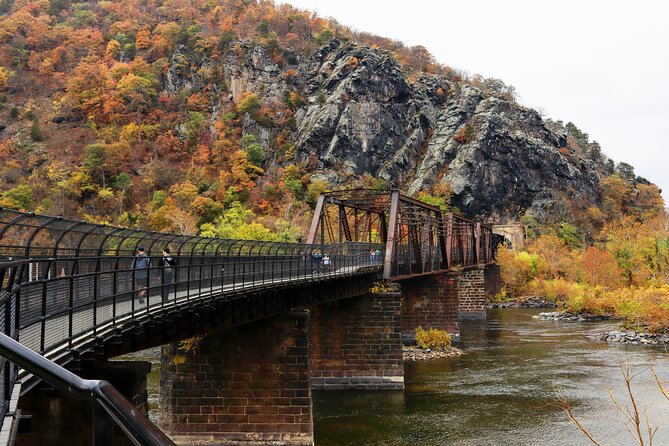
Jefferson Rock is one of the route’s best visual pauses. Named for Thomas Jefferson, the rocky perch looks over the meeting of the rivers and the surrounding hills. The location gives you more than a photo opportunity. It helps explain why Harpers Ferry attracted settlers, manufacturers, soldiers, and politicians.
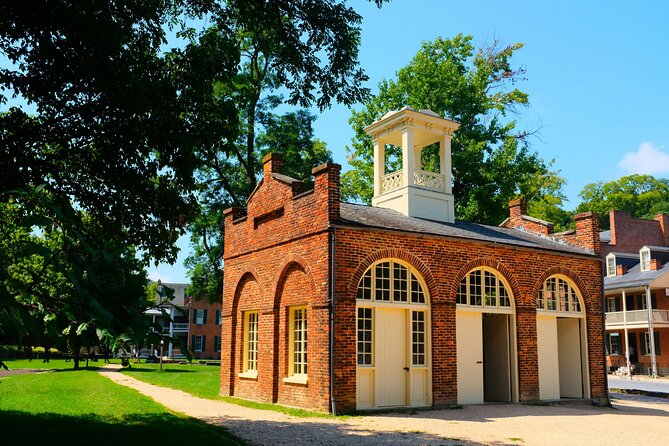
The stop at John Brown’s Fort is brief but emotionally heavy. This small brick engine house became the abolitionist’s final stronghold during his raid. The building itself is modest. The meaning attached to it is not.
I like the way the tour places physical remains beside spoken history. You can look at a quiet structure and then consider the panic, violence, and political shock that once filled the same spot. The short audio segment keeps the visit focused rather than turning it into a long lecture.
More Self-Guided Tours in the USA:
- Fort Sumter Admission and Self-Guided Tour with Roundtrip Ferry
★ 4.5 · 3,343 reviews - San Francisco: Alcatraz Ticket, Ferry, & Self-Guided App
★ 4.5 · 2,460 reviews - San Francisco: Alcatraz, Ferry & Audio Tour w/ Night Option
★ 4.4 · 617 reviews - San Francisco: Self-Guided Bike Rental
★ 4.7 · 161 reviews
Lockwood House, Storer College, and St. Peter’s Church
Lockwood House connects military history with education. Union officers used the building, and it later housed leaders of Storer College. That combination matters because Harpers Ferry changed roles repeatedly. The same town could be a military position, a school center, and a symbol of Black advancement.
Storer College is one of the most important stops for anyone who wants more than a John Brown story. Founded after the Civil War to educate formerly enslaved people, it became a place of learning and leadership during Reconstruction. The campus helps you see education as a form of freedom with practical force.
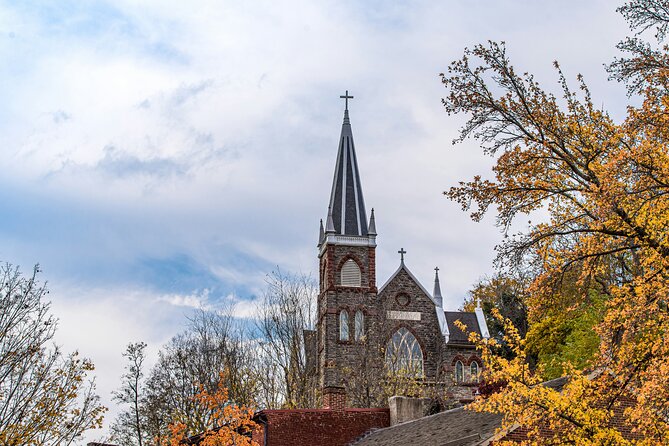
The route then reaches St. Peter’s Roman Catholic Church. Built on a hillside above town, the stone church served Irish immigrant families and survived the Civil War. Its setting makes it easy to appreciate the role of faith and community in a town repeatedly shaken by national events.
These stops also show why the tour is more useful than a quick photo walk. You are not only collecting old buildings. You are following the changing communities that used them.
The Point and the original ferry crossing
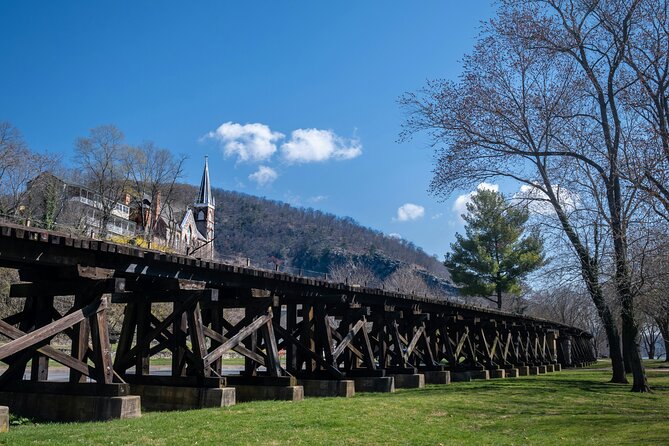
At The Point, the Potomac and Shenandoah Rivers meet. This is the natural center of Harpers Ferry, and the views are among the tour’s strongest rewards. The rivers explain the town’s importance as a place of movement, trade, defense, and industry.
The audio links the geography to Robert Harper’s original ferry. That eighteenth-century crossing gave the town its beginning and helped turn the location into a regional crossroads. Standing at the water, you can see why the site mattered long before trains, factories, or Civil War armies arrived.
The Original Site of the Shenandoah River Bridge adds another layer. It marks the early connection between the town and its surrounding routes. If you enjoy understanding how geography shapes history, these river stops may be the most satisfying part of the tour.
Virginius Island and White Hall Tavern

Virginius Island is where Harpers Ferry’s industrial past becomes visible through ruins and woodland trails. The island once held a busy water-powered industrial village. Today, moss-covered remains and quiet paths replace the factories and workers.
This is one of the places where you should slow down. The ruins are not grand monuments, and the five-minute audio segment cannot explain every detail. Still, the contrast between a productive industrial site and today’s peaceful setting gives the stop real force.
White Hall Tavern shifts the mood. The old tavern served travelers, residents, and Union soldiers. It was a place for food, drink, talk, and politics, which makes it a useful reminder that history also happens in ordinary gathering places.
The route does not treat Harpers Ferry as a frozen museum town. It shows a working place where people made goods, crossed rivers, argued over politics, worshiped, studied, and waited for trains.
Murphy Farm and Bolivar Heights

Murphy Farm carries two very different memories. It was once a battlefield, then became a setting for important Civil Rights speeches. Today, it offers open views and space for quiet thought.
That contrast is worth noticing. Harpers Ferry’s story does not end with the Civil War. The route continues into the long struggle for equality and the public use of historic places for speeches, teaching, and remembrance.
Bolivar Heights is another high point with a military story. The ridge changed hands during Civil War fighting because control of the heights meant control of the town below. The stop combines wide views with an explanation of Harpers Ferry’s strategic position.
The uphill sections may be tiring, especially if you are trying to complete every stop without a break. One person using the tour enjoyed the portions completed but stopped before finishing because the climb became too much. I would treat that as useful planning advice, not a flaw in the narration. Wear comfortable shoes and give yourself permission to shorten the route.
Public Square, the station, and Arsenal Square
Harpers Ferry Public Square brings you back to the center of town life. Markets, militias, protests, and parades once filled this space. It remains a good location for noticing how a small public area can hold many layers of local memory.
The Lower Town Train Station, active today, returns the story to rail travel. The station is a reminder that Harpers Ferry was once tied to a much wider transportation system. It also makes a logical endpoint because you can see the connection between old rail travel and your own arrival.
Arsenal Square returns to John Brown. The former arsenal occupied a larger area than the quiet open space suggests, and the square witnessed the explosive opening of his raid. After hearing about the armory, fort, and arsenal, the route gives you a clearer sense of how close these events were to one another.
The Appalachian Trail staircase is one of the route’s most memorable physical features. It cuts into the cliffside and links Lower Town with the trail. It is scenic and symbolic, but it is also steep. If you are not comfortable with stairs or prolonged uphill walking, this is a natural place to adjust your plans.
How the phone-guided format works
The app uses your location to trigger information at the designated sites. That is the tour’s best technical feature. You can look at a marker, ruin, church, or river view while the narration explains what you are seeing.
You are not tied to a guide’s pace. You can pause for photographs, read signs, take a break, or replay a section. That flexibility is especially useful in Harpers Ferry, where the route shifts between narrow town streets, hills, overlooks, and wooded ruins.
The interface may take a moment to understand. The map is accessed through a button at the bottom of each screen, and stop labels are not always as clear as they could be. I recommend opening the map before you begin, checking your direction, and learning how to pause and restart the audio.
Download everything before leaving home. Cell service is unreliable at best, and a location-based tour is not much use if the narration cannot load. Bring your own charged smartphone. The app and audio guide are included, but the phone is not.
Is $9.99 good value?
At $9.99 per person, this is an inexpensive way to add structure and context to a visit. You receive unlimited access to the downloaded tour, and children 10 and under are free. The private format also means you do not share the experience with a scheduled group.
The value depends on how much of the route you complete. If you walk only a few stops, the price is still reasonable, but you may not hear the full story. If you cover the town, rivers, ruins, upper viewpoints, and college sites, the fee compares well with a paid group tour.
The main limitation is that the audio cannot answer personal questions or adjust the route for your walking ability. A live guide could do that. In return, you gain privacy, flexibility, and the freedom to stop whenever you like.
Free cancellation is available up to 24 hours before the start time. Cancellations made within 24 hours are not refunded.
Who should choose this Harpers Ferry tour?
I would recommend it to independent visitors who enjoy history but do not want a fixed group schedule. It suits couples, families with older children, and small private groups that prefer to pause often or split up briefly.
It is especially good for people interested in several parts of Harpers Ferry’s past: John Brown, the Civil War, Black education, Catholic immigrant life, industry, railroads, and the Appalachian Trail.
I would be cautious if you want a flat, easy stroll. The route includes hills, stairs, and upper-town locations. You can stop early, but you will not get the full experience without some uphill walking.
Should you book it?
Book this tour if you want a low-cost, self-guided way to connect Harpers Ferry’s views and ruins with its major stories. The location-triggered audio is convenient, the route covers far more than John Brown, and the private format lets you set the pace.
Skip it if you need a fully accessible route, a live guide, or a simple loop with little elevation. For everyone else, download it before arrival, start at the train station, wear good shoes, and think of the two-hour estimate as a brisk target rather than a rule.
FAQ
How much does the Harpers Ferry audio tour cost?
The tour costs $9.99 per person. Children 10 and under are free.
How long does the tour take?
The approximate duration is two hours. The full route includes 19 stops, and hills, stairs, photographs, and breaks can make the outing take longer.
Where does the tour start and end?
It starts at Lower Town Train Station, 182 Potomac Street, Harpers Ferry, West Virginia. The tour ends back at the meeting point.
Do I need my own smartphone?
Yes. The smartphone is not included. The app, tour download, and audio guide are included with the experience.
Should I download the tour before arriving?
Yes. Cell service is spotty at best, so download the tour before you go.
Is the African American history museum open?
No. The museum focused on African American stories in Harpers Ferry is currently closed for renovations.
More Audio Tours in the USA
- Alcatraz Inside Access Ferry and Audio Tour with Night Option
★ 4.0 · 138 reviews - Gozo Day Pass Ferry and Hop-on Hop-off buses with audio Tour
★ 3.0 · 19 reviews
Just added around the USA
- Old Town Alexandria in a Day with Round Trip Ferry Cruise★ 4.5 · 17 reviews
- Explore Olympic National Park from Seattle through Van /Ferry★ 4.0 · 21 reviews
- Muir Woods Sausalito Entry & Ferry to Fishermans Wharf included★ 4.0 · 7 reviews
- Muir Woods and Sausalito + Ferry, Alcatraz Night Tour & Aquarium Access★ 4.0 · 3 reviews
- San Francisco Alcatraz, Ferry and 2 Day Hop On Hop Off Bus Tour★ 3.0 · 2 reviews
- Golden Gate Bridge Bike Rental with Sausalito Ferry Return★ 4.5 · 2 reviews
- Take the San Diego Ferry to our Coronado Bike Tour★ 5.0 · 2 reviews
- Statue of Liberty Ellis Island with Pre-Ferry Tour★ 3.5 · 23 reviews
Self-Guided Tours, compared.
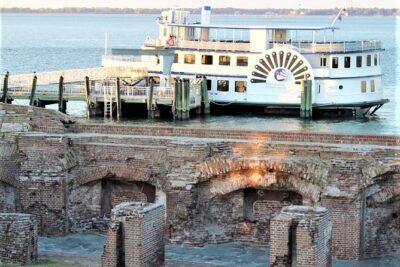
Fort Sumter Admission and Self-Guided Tour with Roundtrip Ferry
Read our review →


Alcatraz Inside Access Ferry and Audio Tour with Night Option
Read our review →

Gozo Day Pass Ferry and Hop-on Hop-off buses with audio Tour
Read our review →
Ferry ticket – Day return ticket to Inishbofin Island from Cleggan. Self Guided.
Read our review →Browse the lists this tour appears in