Reviewed · FERRY TRIPS
Manaus to Santarém: 36-Hour Ferry on the Amazon
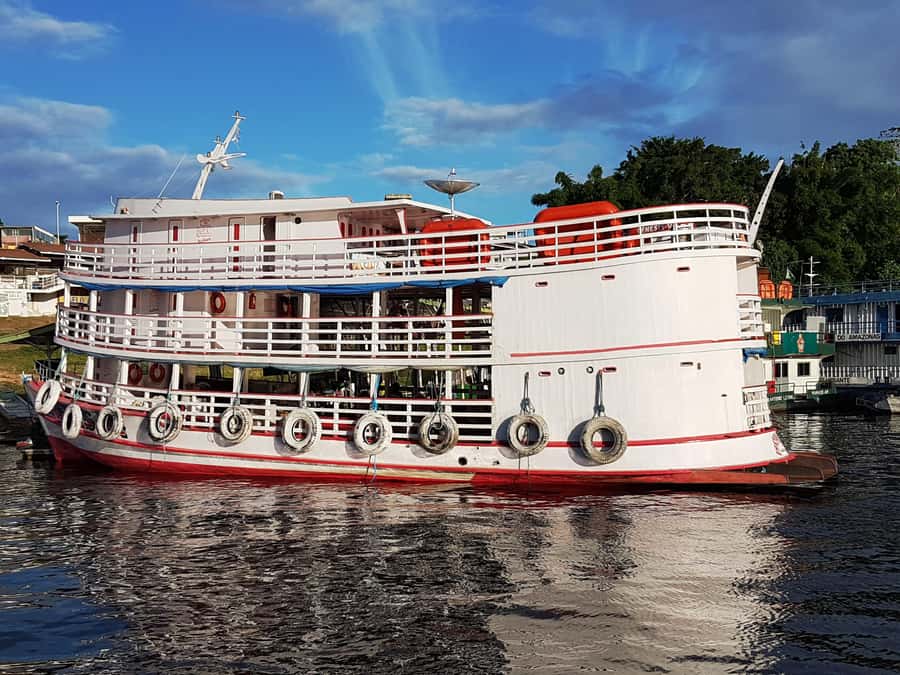
The Amazon is your road for two days. This ferry trip gives you a practical way to travel from Manaus to Santarém while watching the rainforest slide past from the deck. I like the authentic local transport and the chance to spend 36 hours surrounded by one of the world’s great rivers. I also like that you can choose between a hammock and a private cabin.
The main catch is comfort. This is a working transportation ferry, not a polished sightseeing cruise. Crowded decks, basic facilities, loud music, delays, and limited privacy can all be part of the deal, especially if you expect a small, quiet boat.
Key things to know before sailing
- The ferry carries more than sightseeing passengers: Expect a large working boat, with hammocks packed across shared decks and potentially more than 1,000 passengers.
- A hammock is the budget choice: Bring your own hammock and ropes, or arrange to buy one as an add-on.
- A cabin costs more but may be worth it: The private option includes air conditioning and a bathroom, though cabin quality and size can vary.
- Meals are extra: Plan on about $15 per day for breakfast, lunch, and dinner, and carry cash for food and drinks.
- Santarém is the endpoint: You can stay in town or arrange a transfer onward to Alter do Chão.
- Phone service mostly disappears: Bring offline entertainment, water, insect repellent, and patience with Amazon River time.
Manaus pickup and the start at the port
Your journey begins with pickup at your hotel in Manaus. From there, you go to the port and board the ferry for the long run downriver to Santarém.
That pickup matters more than it may sound. Manaus port activity can be confusing, and the boat itself is not a small excursion craft waiting in a quiet marina. Having an organizer take you to the dock, help with check-in, and guide you to your sleeping area can make the first hour much easier.
One passenger described the process as smooth from hotel pickup through boarding, with the guide handling the transfer and helping with cabin check-in. That is especially useful if you do not speak Portuguese or if you have a large bag, a hammock, or a tight onward schedule.
Do not expect the boat to leave with Swiss-watch precision. Boats here operate on river time. Delays may come from port operations, checks, or other routine events. One sailing experienced a police inspection in which passports and bags were checked. The process was friendly, but it added time.
Carry your passport or national ID, and keep it accessible. Your documents may be needed during boarding or an onboard inspection.
More Ferry Trips in the world:
- New York City: Statue of Liberty & Ellis Island with Ferry
★ 4.6 · 18,683 reviews - All Inclusive Blue Mountain,Scenic World,Lunch,Koalas,ferry
★ 5.0 · 7,832 reviews - Muir Woods and Sausalito (Return by Bus or Ferry)
★ 4.5 · 5,098 reviews
What the Amazon looks like from the deck
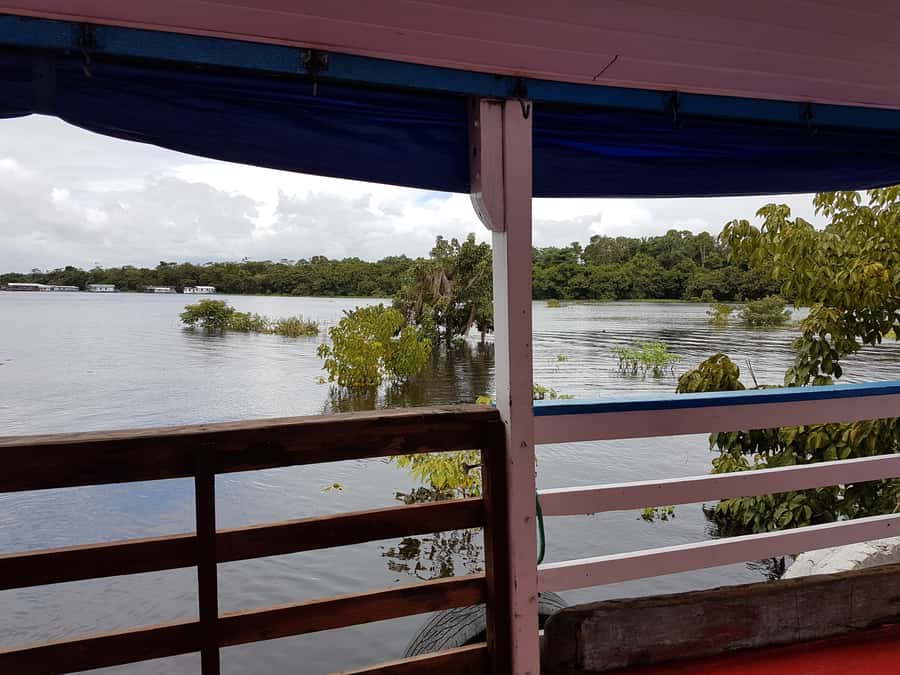
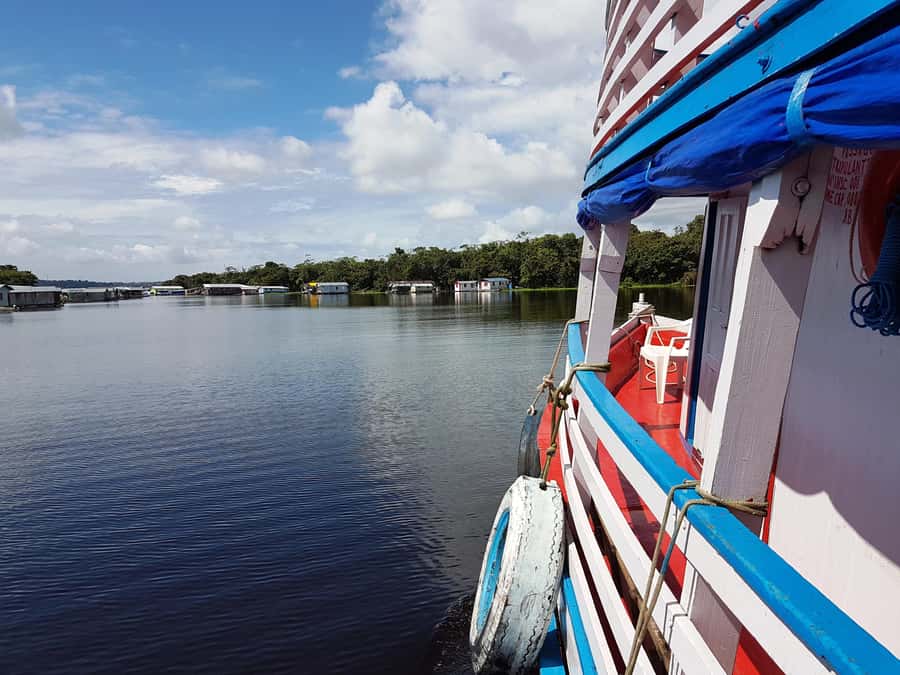
For 36 hours, the river is the main attraction. You are not following a guided jungle trail or stopping at a wildlife lodge. You are watching the Amazon from a moving ferry, with rainforest and broad river views surrounding you for long stretches.
The scale is the point. The river feels less like a river in the European or North American sense and more like a moving inland sea. You will have time to watch the banks change, look for birds or other wildlife, and sit with the sheer size of the waterway.
I like this slow pace because it gives the journey a local rhythm. There is no forced schedule of short photo stops. You have room to read, sleep, talk, eat, and watch the horizon. The tradeoff is that wildlife sightings are not guaranteed, and much of the trip is simply river travel.
If your main goal is guided jungle sightseeing, this is not the best choice. You should book a dedicated Amazon lodge or wildlife program for that. This ferry is best understood as transportation with memorable views, not as a wildlife tour.
Hammock travel: the most authentic and cheapest option
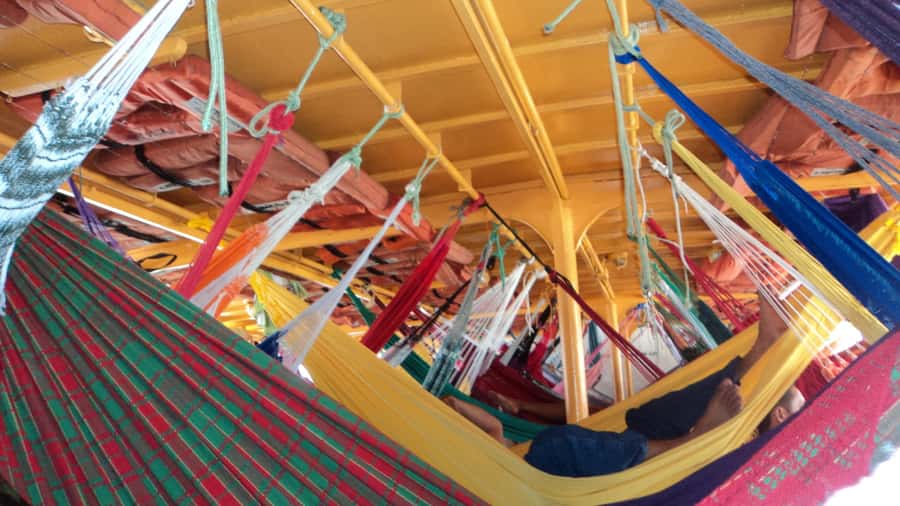
Most passengers use hammocks. You string yours in a shared area, usually with many other hammocks close together. This is how a large number of people travel on Amazon boats, and it is the clearest way to experience the ferry as a local transportation service rather than a tourist cruise.
The hammock option keeps the price down and gives you the full communal atmosphere. You will be close to other passengers, and you will need to be comfortable sleeping in a shared space. Privacy is limited. So is your ability to control noise, lighting, and foot traffic.
Bring your own hammock and ropes if you can. If you do not have them, you may buy a hammock as an add-on during checkout. Do not leave this detail until the last minute. You want your sleeping setup ready before the boat fills and people claim their places.
A towel, sleeping bag, and insect repellent are also listed as useful items. The sleeping bag can add warmth and personal comfort, while the towel helps with the basic onboard facilities. Pack your valuables in a small day bag that stays with you.
The shared deck can be social, but it may not be peaceful. One passenger found the upper deck’s music so loud that normal conversation was difficult. If you need quiet to sleep, bring earplugs. That is not an official requirement, but it is sensible preparation for a large public ferry.
Private cabins: better privacy, mixed expectations
The cabin option is aimed at passengers who want air conditioning, a private bathroom, and a break from the shared hammock deck. A two-person cabin can make a 36-hour crossing much easier, especially if you are traveling as a couple or you know you will struggle to sleep in public.
At $140 per person for the experience, the cabin upgrade may offer good value if privacy and rest are important to you. You are paying for a more controlled space during a long crossing, not for luxury.
Set your expectations carefully. Cabin standards are basic, and the size or condition may not match the photographs you saw when booking. One serious complaint involved a passenger who paid for a larger cabin for three people but received a smaller two-bed room instead. The suggested solution was to place a hammock outside the cabin, which the passenger considered unacceptable.
That experience does not mean every cabin will be wrong, but it does mean you should confirm the exact cabin arrangement before departure. If three people are sharing, ask precisely how many beds and how much floor space are included. Keep confirmation messages and booking details available when you board.
The cabin is still the more comfortable choice for many people. Just think of it as functional river transport with air conditioning, not a hotel room on water.
Same harbour, a different sailing:
- Blue Mountains Small-Group Tour from Sydney with Scenic World,Sydney Zoo & Ferry
★ 5.0 · 3,709 reviews - Fort Sumter Admission and Self-Guided Tour with Roundtrip Ferry
★ 4.5 · 3,343 reviews - Waiheke Island: Ferry & Hop-On Hop-Off Explorer Bus Tickets
★ 4.6 · 3,311 reviews - Corralejo: Return Ferry Ticket to Lobos Island Fuerteventura
★ 4.7 · 3,098 reviews
Food, drinks, and daily life onboard
Meals and drinks are not included. The practical allowance is about $15 per day for breakfast, lunch, and dinner, though you should carry extra cash for drinks and snacks.
Food service may begin early. One passenger noted breakfast from around 5 a.m., lunch around noon, and dinner from about 6 p.m. Those hours suit the working rhythm of the boat, but they may not match your own sleep schedule.
Bring water and some food of your own. Cash is important because you may have no reliable way to pay electronically during the trip. You are also told to bring drinks, so do not assume the ferry will provide everything you need.
The onboard eating area may be lively. Music can be loud, particularly on the upper deck. Some people will enjoy the social energy; others will want a quieter corner. A cabin gives you somewhere to retreat, but you should still plan for shared public areas when you eat or watch the river.
Since you are on the boat for 36 hours, small comforts matter. Pack a light sweater or cover-up for air-conditioned areas, a towel, toiletries, a sleeping bag, and a small amount of entertainment that works without internet.
The long middle stretch: 36 hours without a signal
The central part of the trip is simply the crossing. There is no major scheduled attraction every few hours. You spend time on deck, rest in your hammock or cabin, eat, and watch the river.
Mobile phone service and internet access are expected to be unavailable for most of the journey. I see that as part of the experience, but you need to prepare for it. Download maps, booking confirmations, music, podcasts, books, and any translation tools before leaving Manaus.
This forced pause can be refreshing if you plan for it. You can look out across the river without checking messages every few minutes. It can also feel long if you expect nonstop activity.
Use the time to observe the boat itself. The ferry shows you how people actually move along the Amazon. Hammocks, shared decks, meal times, cargo movement, and the steady work of the crew are as important to the experience as the rainforest views.
Safety onboard appears to be taken seriously enough for routine document and baggage checks. One solo woman reported feeling safe throughout the trip, including during a military police inspection. Still, keep your passport, cash, and electronics secure, and do not leave important items loose beside your hammock.
Arriving in Santarém
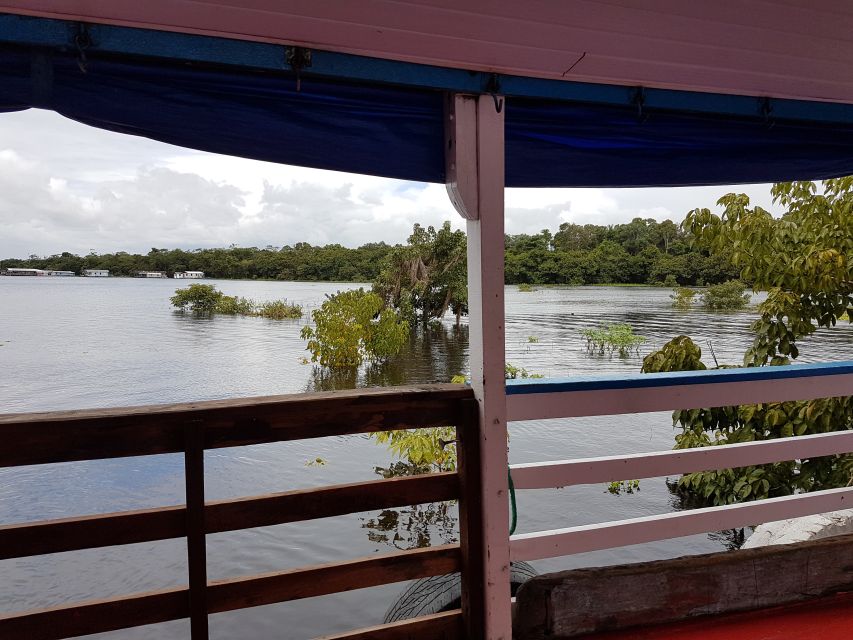
After about 36 hours, the ferry reaches Santarém. This is where the transport portion ends, so make sure you know your next step before disembarking.
You can stay in Santarém, or select a transfer to Alter do Chão. The onward option is useful if you are using the ferry as part of a wider Amazon route and want to continue straight to the popular riverside destination.
There is no hotel drop-off in Santarém included. If your package does not include the transfer to Alter do Chão, you will need to arrange your own onward transport. Uber does not work at the port, so be ready to ask for a taxi if needed.
If you have bought a hammock through the booking arrangement, remember to ask about collecting it when you arrive. One passenger specifically advised making this clear at the destination, rather than assuming the handover will happen automatically.
A smooth arrival depends on having your bags, cash, phone details, and transport plan ready before the boat docks. Disembarkation can be busy, and you may not have internet immediately.
Is the $140 price good value?
At $140 per person, the trip is not cheap by backpacker bus standards, but it covers a very long distance and gives you an unusual way to see the Amazon. The value is strongest when you need to travel between Manaus and Santarém anyway.
The price includes hotel pickup in Manaus and your selected sleeping arrangement. It does not include meals, drinks, or hotel drop-off in Santarém. If you choose the Alter do Chão transfer, check that it is part of your selected option.
The hammock version offers the strongest budget value. You get the river crossing and the same broad views without paying for a private room. The cabin can be worth the extra cost for couples, light sleepers, or anyone who wants air conditioning and a private bathroom.
The weaker value appears when you expect a cruise-style holiday. You are not paying for entertainment, guided excursions, luxury meals, or guaranteed wildlife viewing. You are paying for a long-distance ferry ride with a memorable setting.
A 3.9 rating from 55 reviews reflects that split. Some passengers found the organization excellent, the cabin comfortable, and the trip exactly as expected. Others felt the comfort was too basic for the price, especially when cabin arrangements did not match what they had paid for.
Who should book this Amazon ferry?
I would choose this experience if you want to travel between Manaus and Santarém and prefer an authentic river crossing to a flight. It suits people who can handle basic conditions, slow schedules, shared spaces, and limited connectivity.
It is also a strong choice if the journey itself matters to you. Spending 36 hours on the Amazon gives you a better sense of distance and daily river life than a quick flight ever can.
The hammock option suits independent budget travelers who sleep well in public spaces and enjoy meeting people. The private cabin suits couples or anyone who needs more privacy, but I would confirm the room size and bed arrangement before paying.
I would not choose it if you want a quiet luxury cruise, a structured jungle safari, or guaranteed animal sightings. People with mobility impairments, wheelchair users, pregnant women, and those with heart or respiratory problems are advised not to take this activity.
You should also think hard about the 36-hour duration. Once the boat leaves, you are committed to the crossing. Bring water, food, cash, insect repellent, a towel, a sleeping bag, and an offline plan for your time.
Should you book the Manaus to Santarém ferry?
Book it if you want the real river journey, not a polished cruise. The views, local transport experience, and long stretch of quiet water make this a memorable way to cross the Amazon.
Choose the hammock to save money and experience the shared boat culture. Choose the cabin for privacy, but confirm exactly what you are receiving. Keep your expectations practical, carry cash, and allow for delays.
For the right passenger, this is one of the most distinctive ways to get from Manaus to Santarém. For anyone seeking comfort and organized sightseeing, it may feel like a very long ride.
FAQ
How long is the ferry from Manaus to Santarém?
The journey takes about 36 hours.
Is hotel pickup included in Manaus?
Yes. Pickup from your hotel in Manaus is included.
Can I sleep in a hammock?
Yes. You can choose hammock accommodation. Bring your own hammock and ropes, or buy a hammock as an add-on during checkout.
Is a private cabin available?
Yes. The private cabin option includes accommodation for two people, air conditioning, and a private bathroom.
Are meals included?
No. Meals and drinks are extra. You should budget about $15 per day for breakfast, lunch, and dinner.
Should I bring cash?
Yes. Cash is recommended for buying food and drinks onboard.
Is there internet or mobile phone service during the trip?
You should expect little or no internet access or mobile phone signal for most of the journey.
Can I continue from Santarém to Alter do Chão?
Yes. A transfer from Santarém Port to Alter do Chão is available if you select that option.
Just added around the world
- Private Tangier Tour from Ferry /Cruise ship Including Lunch★ 3.8 · 12 reviews
- Old Town Alexandria in a Day with Round Trip Ferry Cruise★ 4.5 · 17 reviews
- Lake Como: Villa Carlotta Entry Tickets with Ferries★ 4.1 · 5 reviews
- Ferry tickets from Tarifa Spain to Tangier port in Morocco★ 4.5 · 16 reviews
- Victoria & Butchart Gardens Tour with Gulf Island Ferry★ 4.0 · 7 reviews
- Salou to Cambrils Round Trip Ferry★ 4.5 · 7 reviews
- Full day Tangier Tour from Cruise or ferry from tarifa★ 4.5 · 5 reviews
- Tangier Private Tour from Tarifa with Express Ferry★ 5.0 · 7 reviews
Ferry Trips, compared.

Muir Woods and Sausalito (Return by Bus or Ferry)
Read our review →
Fort Sumter Admission and Self-Guided Tour with Roundtrip Ferry
Read our review →
Waiheke Island: Ferry & Hop-On Hop-Off Explorer Bus Tickets
Read our review →
Return Ferry Ticket to Lobos Island Fuerteventura
Read our review →
Fort Sumter Entry Ticket with Roundtrip Ferry
Read our review →
Victoria & Butchart Gardens Tour with Ferry from Vancouver
Read our review →