Reviewed · TOURS
Walk & Canal Tour: Copenhagen Highlights + Changing of the Guards
Copenhagen rewards a good first walk. This three-hour route links the city’s royal squares, harbor views, fairy-tale landmarks, and everyday public spaces, with a short ride on the electric harbor ferry when service allows. I like the small maximum group of 15 and the way the route mixes major sights with useful local orientation. I also like the finish at Amalienborg, where early departures can catch the full noon guard ceremony. The main drawback is the amount of walking, plus the fact that the ferry cannot be guaranteed.
This is a fast-moving introduction rather than a deep visit inside Copenhagen’s museums and palaces. You will usually cover about 6 to 7 kilometers, and the ferry may be crowded, canceled, or unavailable on the day. Still, the guides, including Michael, Maybritt, Amalie, Signe, Mia, Otto, Andy, Andreas, Eric, and Line, are praised for clear storytelling, thoughtful pacing, and friendly attention to individual questions.
Key points at a glance
- A smart first-day route: Begin at Copenhagen Central Station and finish near Nyhavn, Kongens Nytorv, and the metro.
- The electric harbor ferry adds local flavor: You see the Opera House, Amalienborg, Nyhavn, and waterfront buildings from the water when space permits.
- The Changing of the Guards depends on your start time: The 9:00 and 9:30 tours aim for the full noon ceremony, while later departures see a smaller guard change.
- Expect a serious walk: The route includes Kastellet, the Little Mermaid, Churchill Park, and several central sights over roughly three hours.
- The ferry has a clear backup plan: If the boat is full or canceled, the guide continues on foot, but the Little Mermaid may not fit into the scheduled route.
- The best value is orientation: At $77.39 per person, the tour makes sense if you want history, transportation, and city bearings in one outing.
Why this route works as a first look at Copenhagen
Copenhagen can feel easy to understand on a map, but its sights are spread across different districts and waterfront areas. This tour gives you a useful mental picture. You begin at the central station, cross through the historic core, reach the harbor, ride or walk along the waterfront, and finish in the royal quarter.
I like that the route does not focus only on postcard stops. You pass working public spaces, the Royal Danish Library, an active military fortress, public transit on the harbor, and the seat of Danish government. That mix helps you see Copenhagen as a functioning city, not just a collection of monuments.
The experience is also strongly guide-led. The stops are often short, around five minutes, so the value comes from the stories and connections your guide provides. Maybritt is especially praised for combining myths and local customs with a comfortable pace, while Michael is described as approachable and good at answering questions. A small group makes it easier to hear and easier to ask for help if the weather or walking speed becomes an issue.
Other crossings travellers book around the world:
- New York City: Statue of Liberty & Ellis Island with Ferry
★ 4.6 · 18,683 reviews - All Inclusive Blue Mountain,Scenic World,Lunch,Koalas,ferry
★ 5.0 · 7,832 reviews - Muir Woods and Sausalito (Return by Bus or Ferry)
★ 4.5 · 5,098 reviews
Meeting beneath the clock at Central Station
The starting point is inside Copenhagen Central Station, in the main hall beneath the large round analog clock beside the 7-Eleven. There are two 7-Eleven shops, so use the clock as your main landmark and choose the one directly next to it.
This is a practical meeting point. The station is central, easy to reach by public transportation, and familiar to locals. Your guide begins with the station’s role as a transport hub, then uses it to introduce Copenhagen’s modern daily rhythm before leading you into the city.
The first stop lasts only about five minutes, but it helps settle the group and gives you a clear place to begin. Arrive with enough time to find the correct 7-Eleven. A busy station hall is not the place to discover that you are standing beside the wrong clock.
Tivoli and the Glyptotek: two short cultural previews
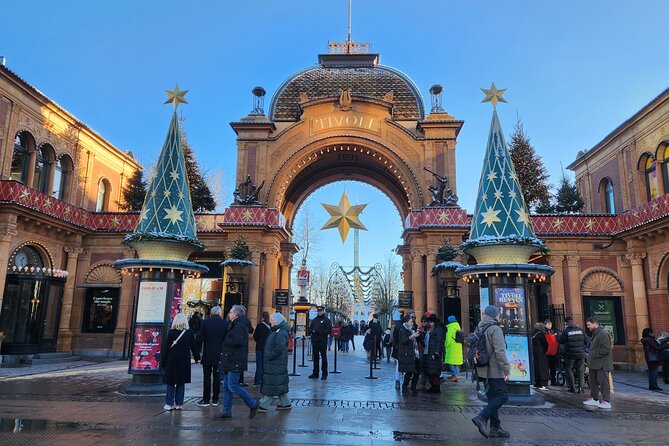
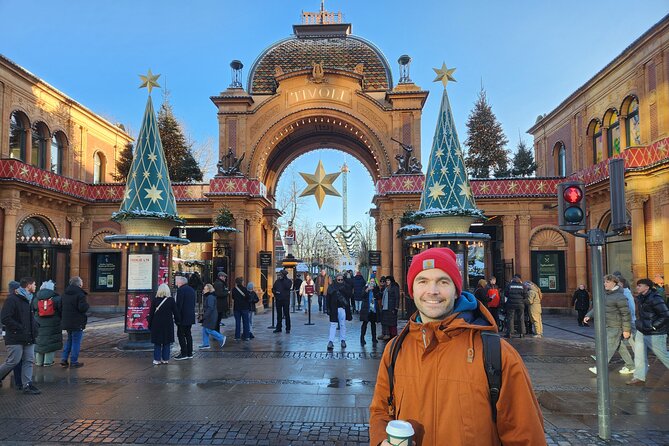
The walk soon reaches Tivoli Gardens. You stop outside rather than entering, so the admission fee is not included and there is no ride time or park visit during this experience. Even from the entrance, the guide can point out the park’s long connection with Copenhagen’s social life and its founding in 1843.
The useful detail here is the link to Walt Disney. Tivoli’s atmosphere and design helped inspire Disneyland after Disney visited in the 1950s. That story gives the stop more weight than a quick photograph, especially if you plan to return later for a full visit.
Next comes the Ny Carlsberg Glyptotek, again viewed from outside. The museum is known for its art, architecture, and glass dome, with a tropical winter garden visible beneath it. The stop is brief, so treat it as an architectural introduction, not a museum tour. If you want to see the collection, plan separate time and admission.
These two pauses show how Copenhagen pairs playfulness with serious cultural institutions. They also remind you that a three-hour route cannot offer full access to every site it passes.
Christiansborg and the Black Diamond waterfront
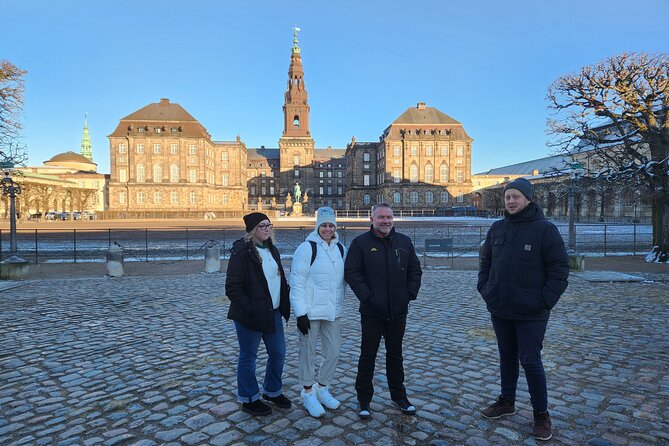
Christiansborg Palace is one of the more substantial stops, with about ten minutes devoted to its story. The site has served royal, political, and judicial roles, and today it houses the Danish Parliament, the Supreme Court, and the Royal Reception Rooms.
Your guide explains that the palace has burned three times and been rebuilt in different styles. That detail makes the building a useful lesson in Denmark’s political development. Here, royal ceremony and parliamentary government share the same address, which is one of the clearest examples of old and new Copenhagen existing side by side.
You do not tour the palace interiors as part of the experience. The stop works best for understanding the site and its role in Danish public life, while a separate palace visit would be needed for the rooms and exhibitions.
From Christiansborg, the route continues toward the Royal Danish Library, known as the Black Diamond. Its black granite exterior reflects the harbor, and the building serves as a library, cultural venue, and everyday gathering place. This is a good place to notice Copenhagen’s modern design language before the route changes from pavement to water.
Same harbour, a different sailing:
- Blue Mountains Small-Group Tour from Sydney with Scenic World,Sydney Zoo & Ferry
★ 5.0 · 3,709 reviews - Fort Sumter Admission and Self-Guided Tour with Roundtrip Ferry
★ 4.5 · 3,343 reviews - Waiheke Island: Ferry & Hop-On Hop-Off Explorer Bus Tickets
★ 4.6 · 3,311 reviews - Corralejo: Return Ferry Ticket to Lobos Island Fuerteventura
★ 4.7 · 3,098 reviews
The harbor ferry: a useful ride with a real condition
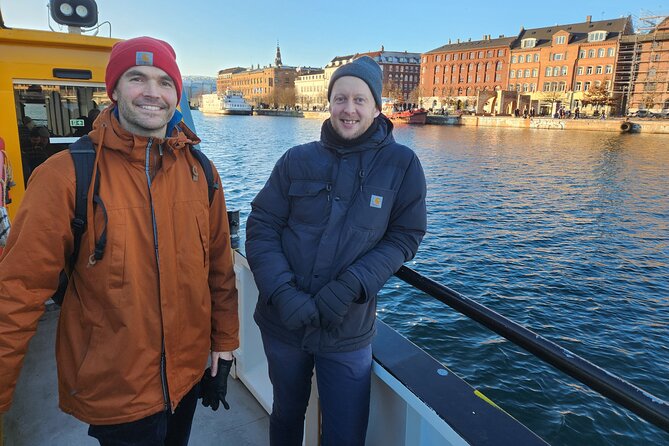
The electric harbor bus is one of the most appealing parts of the experience. It is not a private sightseeing boat. It is part of Copenhagen’s public harbor network, which gives the ride a more local feel and keeps it practical rather than theatrical.
The trip lasts about 25 minutes. From the water, you get views of the Opera House, Amalienborg Palace, Nyhavn, houseboats, and less familiar stretches of the waterfront. The low viewpoint changes the way you see the city, and the ride gives your feet a break at roughly the midpoint.
There is an important catch: seats cannot be reserved. On weekdays, the ferry may be quiet, but weekends can bring full boats. Service can also be canceled. If that happens, the guide follows a scenic walking alternative, and the total distance rises from roughly 5 kilometers to about 6 or 7 kilometers.
One reported experience involved a full ferry and roadworks, which meant the Little Mermaid could not fit into the planned route. The guide offered an optional later visit, but the timing did not work for everyone. I would treat the ferry and the Little Mermaid as planned features, not absolute guarantees.
What you see from the water
The Old Stock Exchange is one of the notable sights along the harbor route. Its distinctive dragon-tail spire has long made it easy to identify, though a severe fire in April 2024 badly damaged the building. Restoration work is underway, so you will see a landmark in recovery rather than a fully intact historic interior.
The Opera House provides a sharp contrast. Its clean modern lines and broad roof face the water, showing how strongly Copenhagen connects architecture, performance, and the harbor. From the ferry, the building is easier to appreciate as part of the waterfront than it might be from street level.
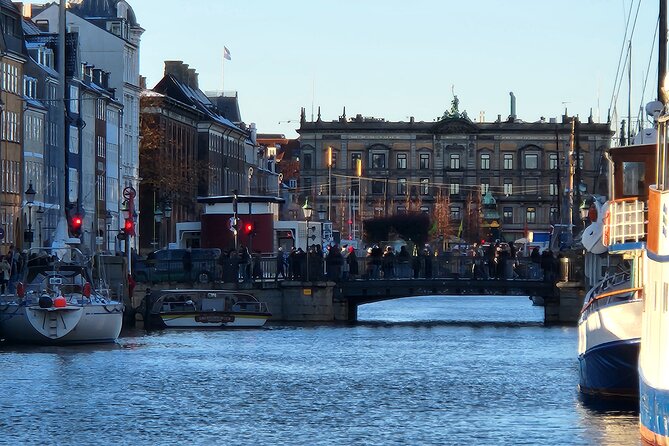
Nyhavn receives only a brief pass-by. That is enough for the famous row of painted houses, old ships, and canal reflections, but not enough for a relaxed café stop. I recommend returning later if you want to sit by the water, take photographs, or explore the side streets around Kongens Nytorv.
The short water section is valuable because it lets you see several major sights without adding a separate boat excursion to your day. It is also the part most exposed to public transport conditions, so keep your expectations flexible.
The Little Mermaid and Gefion Fountain
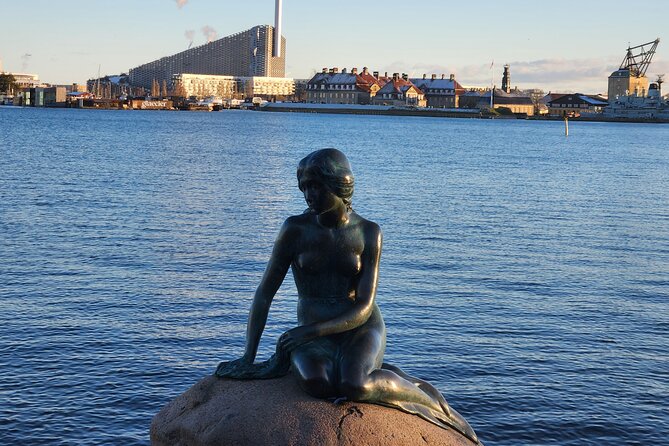
After the harbor section, the route heads to the Little Mermaid. The bronze statue is smaller and quieter than many first-time visitors expect, but that modest scale is part of its character. Your guide connects the statue to Hans Christian Andersen, the fairy tale, and Denmark’s long relationship with the sea and storytelling.
The stop lasts about ten minutes. That is enough to hear the background and take photographs, though the area can be busy around the statue. If the ferry plan changes, this is the sight most likely to be affected because it lies farther along the waterfront route.
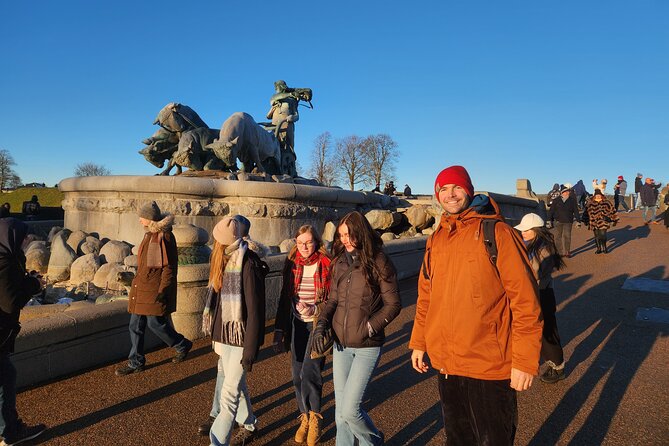
The nearby Gefion Fountain offers a stronger visual scene. Its bronze figures depict the Norse goddess Gefion plowing the island of Zealand from Sweden with four oxen. The water, sculpture, fortress edge, and harbor create a memorable setting, and the guide’s mythological explanation adds meaning to what might otherwise be a quick photo stop.
Walking through Kastellet and Churchill Park
Kastellet is one of the best parts of the walking route for anyone who wants more than central streets and royal buildings. This preserved star fortress has grassy ramparts, cobbled paths, red-brick buildings, a moat, and a windmill. It remains an active military area, but it also functions as a calm public green space.
The route gives you only about five minutes at some of these individual stops, but the walking itself is the point. You get a sense of the fortress layout and see how military defenses have become part of ordinary city life. Swans may be visible around the moat, adding a peaceful touch to a site built for war.
Churchill Park follows nearby. The park honors Danish resistance fighters from the Second World War and includes memorials and a statue of Winston Churchill. This is a quieter pause, with time to reflect on Denmark’s recent past rather than royal ceremony or architecture.
The windmill at Kastellet is another small but appealing detail. It recalls the practical needs of a historic fortress and gives the route a rural-looking image within the city. If you enjoy walking through places where history remains part of daily use, this section may be your favorite.
Marble Church and Amalienborg Palace
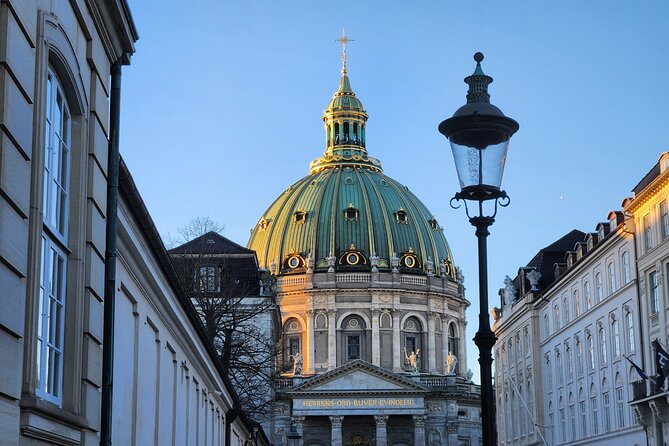
The Marble Church, formally Frederik’s Church, introduces the royal district. Its large dome was inspired by St. Peter’s Basilica in Rome, and the building took more than 150 years to complete. The guide explains how the original project nearly caused financial trouble before the church was eventually finished in 1894.
From outside, the church offers one of Copenhagen’s best visual alignments. Its dome frames the direction of Amalienborg Palace, linking church, monarchy, and city planning in one view. There is no included interior visit, so plan extra time if you want to see beneath the dome.
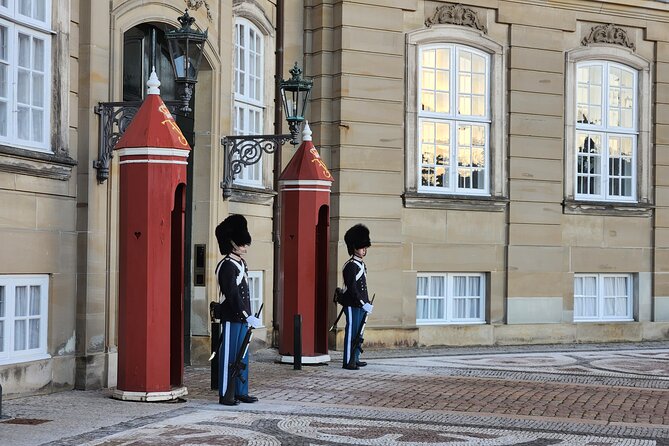
Amalienborg is made up of four matching Rococo palaces around an octagonal square. It has been the Danish royal family’s official home since 1794. The guide explains the palace layout, royal routines, and the role of the guards, while the square gives you space to see the Marble Church and waterfront connections together.
This is a strong ending even without the ceremony. It is central, visually impressive, close to the metro, and about a ten-minute walk from Kongens Nytorv and Nyhavn.
Choosing the right start time for the guards
Your departure time matters more than it might first appear.
The 9:00 and 9:30 tours are designed to arrive at Amalienborg for the full Changing of the Guards at noon. This is the more ceremonial option, with soldiers marching into the square and sometimes the Royal Danish Band accompanying them. If this is your main reason for booking, choose one of these morning departures.
The 11:00 and 1:00 tours finish at the palace too, but they do not offer the same full noon ceremony. Instead, you may see a smaller changeover as one guard shift relieves another. That version is quieter and less formal, but it can offer a closer look at the ordinary rhythm of duty.
The tour ends at Amalienborg, not back at Central Station. That is helpful because you can continue toward Nyhavn, Kongens Nytorv, the metro, or other central sights without retracing your steps.
Price, pace, and who gets good value
At $77.39 per person, this is not the cheapest way to walk around Copenhagen. You are paying for a guide, a carefully connected route, the harbor ferry when available, and the chance to finish at a timed royal ceremony. The value is strongest if you are new to the city and want several neighborhoods explained in one morning.
A maximum of 15 people keeps the experience more personal than a large coach-style outing. The guide can answer questions, adjust the pace somewhat, and notice when someone needs a hand in bad weather. One account describes heavy snow and rain, with the guide offering help to a slower walker.
You should have moderate physical fitness. Comfortable shoes and weather protection matter more than fashionable clothing here. The route includes pavement, cobbled paths, fortress paths, waiting around the palace square, and potentially extra walking if the ferry is unavailable.
The experience is offered in English and includes a mobile ticket. Group discounts may improve the price for parties booking together. Free cancellation is available up to 24 hours before the start time, but changes or cancellations inside that window are not refunded.
Should you book this Copenhagen walk?
Book it if you want a well-paced first orientation with major landmarks, local transport, royal history, harbor scenery, and a guide who can connect the pieces. It suits first-time visitors, couples, families with older children, and anyone who prefers a human explanation to a hop-on bus.
Choose the 9:00 or 9:30 start if the full Changing of the Guards is important. Book with flexible expectations about the ferry, since public service conditions can change the route and may affect the Little Mermaid.
Skip it if you want long museum visits, private transport, a slow café-centered walk, or guaranteed access to every listed sight. For most first days in Copenhagen, though, the combination of a small group, electric harbor ride, fortress paths, and royal finale offers solid value.
FAQ
Where does the Copenhagen tour begin?
It begins inside Copenhagen Central Station in the main hall, beneath the large round clock beside the 7-Eleven. There are two 7-Elevens, so look for the one next to the clock.
Where does the tour finish?
The tour ends at Amalienborg Palace in Amalienborg Slotsplads. The palace is near a metro station and about a 10-minute walk from Kongens Nytorv and Nyhavn.
How long is the experience?
The experience lasts approximately three hours. The route covers about 5 kilometers when the ferry operates as planned, or about 6 to 7 kilometers if the guide needs to continue entirely on foot.
Is the harbor ferry guaranteed?
No. The ferry is part of Copenhagen’s public harbor network, so seats cannot be reserved. It may be full or canceled, especially on weekends. A walking alternative is used when needed.
Which tour time offers the full Changing of the Guards?
The 9:00 and 9:30 departures aim to arrive for the full ceremony at noon. The 11:00 and 1:00 departures finish at Amalienborg but generally include a smaller guard change instead.
What happens if I cancel?
You can receive a full refund if you cancel at least 24 hours before the experience begins. Cancellations or changes made less than 24 hours before the start time are not accepted for a refund.
Just added around the world
- Private Tangier Tour from Ferry /Cruise ship Including Lunch★ 3.8 · 12 reviews
- Lake Como: Villa Carlotta Entry Tickets with Ferries★ 4.1 · 5 reviews
- Old Town Alexandria in a Day with Round Trip Ferry Cruise★ 4.5 · 17 reviews
- Ferry tickets from Tarifa Spain to Tangier port in Morocco★ 4.5 · 16 reviews
- Victoria & Butchart Gardens Tour with Gulf Island Ferry★ 4.0 · 7 reviews
- Tangier Private Tour from Tarifa with Express Ferry★ 5.0 · 7 reviews
- Salou to Cambrils Round Trip Ferry★ 4.5 · 7 reviews
- Full day Tangier Tour from Cruise or ferry from tarifa★ 4.5 · 5 reviews
Tours, compared.
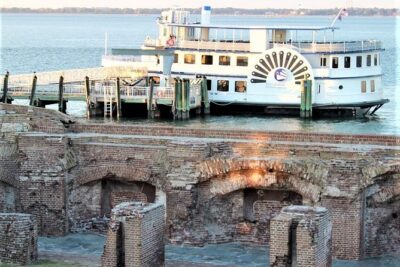
Fort Sumter Admission and Self-Guided Tour with Roundtrip Ferry
Read our review →
Boston to Martha’s Vineyard Day Trip with Optional Island Tour
Read our review →
Victoria & Butchart Gardens Tour with Ferry from Vancouver
Read our review →
Capri Guided Tour with Ferry Tickets & Minibus
Read our review →
City Highlights Tour by Bus, Cable Car, and Ferry
Read our review →
Statue of Liberty and Ellis Island Guided Tour with Ferry
Read our review →